
Framing the right questions.
Articles and series on where the thermal transition is heading, and why.
The OCP CE Elections Decide Readiness. We Are Running.
Rolf Brink on why he is standing in the OCP Cooling Environments leadership election, as one team with Jessica Gullbrand (Eaton) and Mohan J. Kumar (Oracle).
Thermal Boundaries: how the industry really chooses its cooling
A six-part series plus epilogue, written alongside the OCP whitepaper Thermal Boundaries in AI Infrastructure, co-authored with leaders at Oracle, Meta and Avayla.
The five ideas in the paper
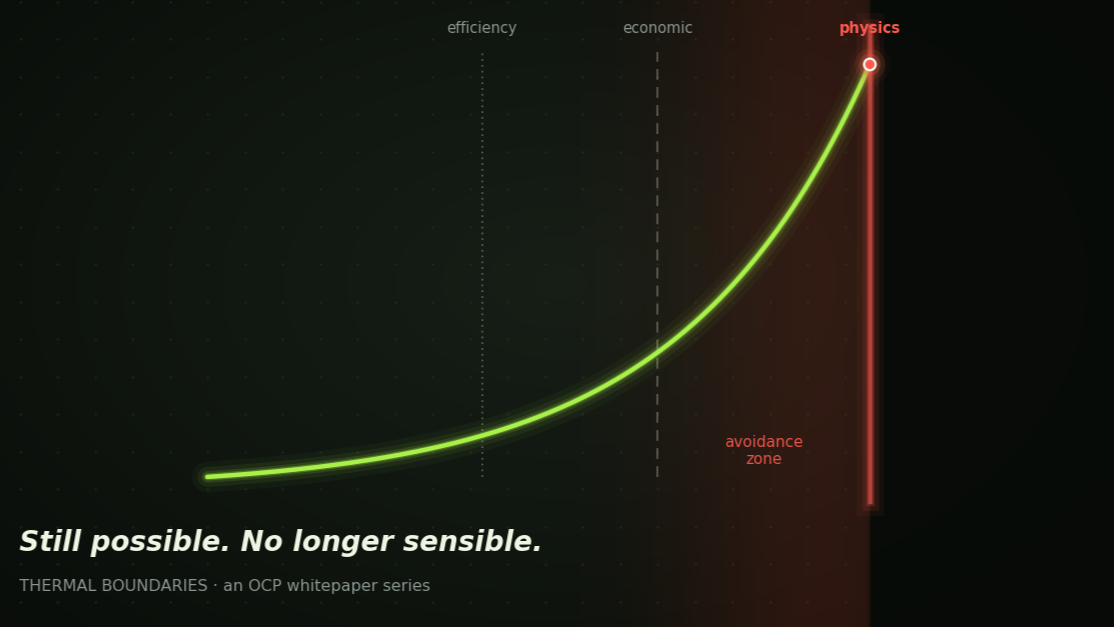
- Three boundaries: efficiency, economic and physics, the points where each cooling method stops making sense
- The least-disruption law: the ecosystem exhausts every option that preserves its current architecture before it accepts one that changes it
- The agency mismatch: those who feel a limit are often not those who can act on it
- Preparation debt: the cost of waiting, paid when the inflection is forced
- A toolbox, not a winner: the future is a set of options matched to the problem
Read the series
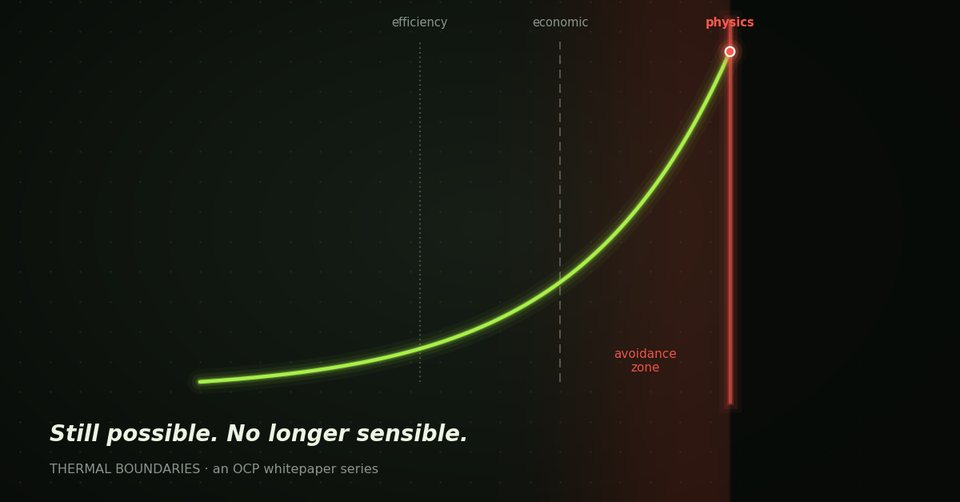
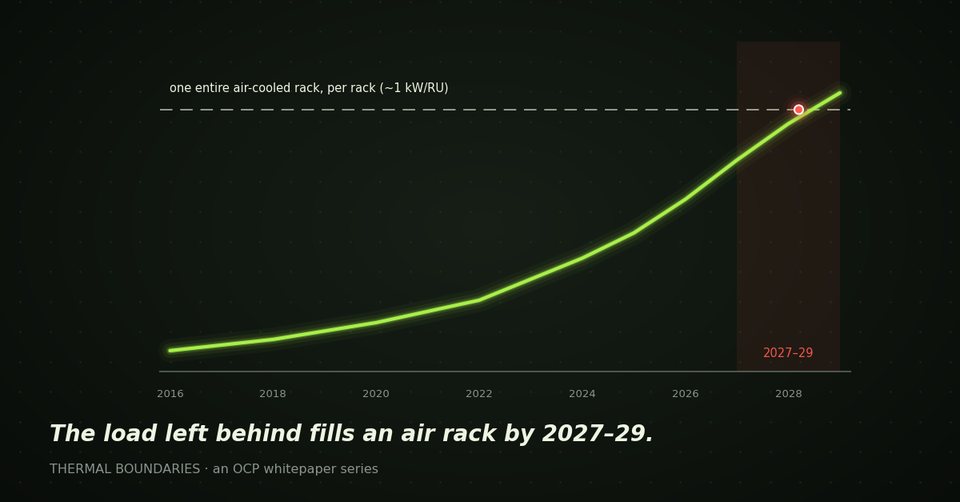
Where Cooling Stops Making Sense
The Three Boundaries of AI Infrastructure
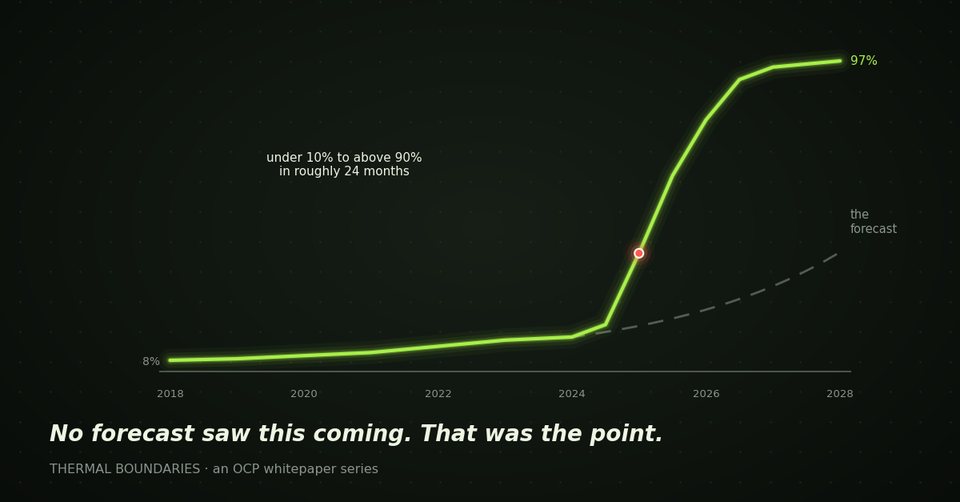
Forced, Not Chosen
The Adoption Law
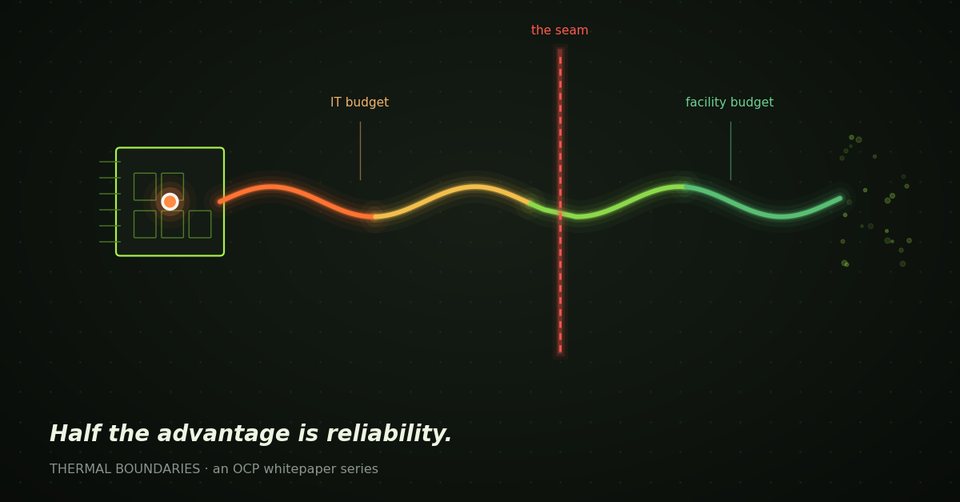
The Shape of the Heat and the Path It Travels
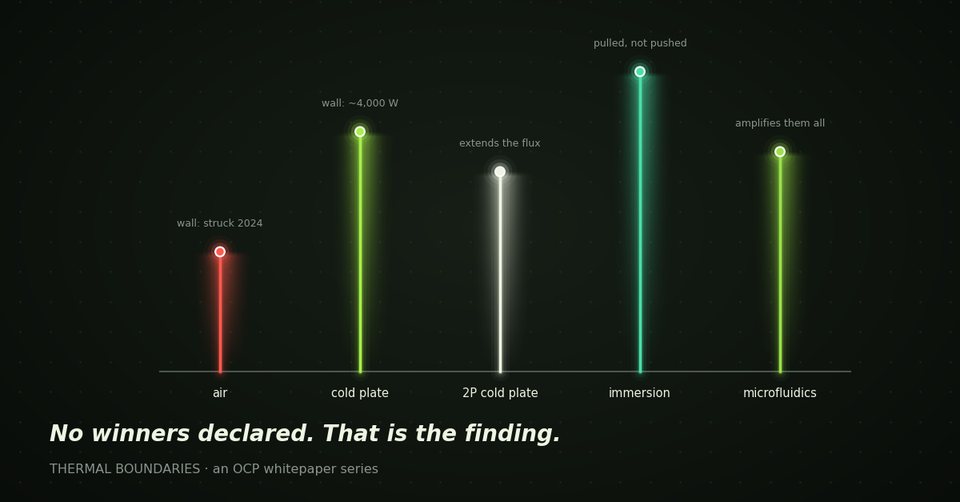
The Technologies, Read by Their Boundaries
The Economics of Cooling, and Who Actually Pays
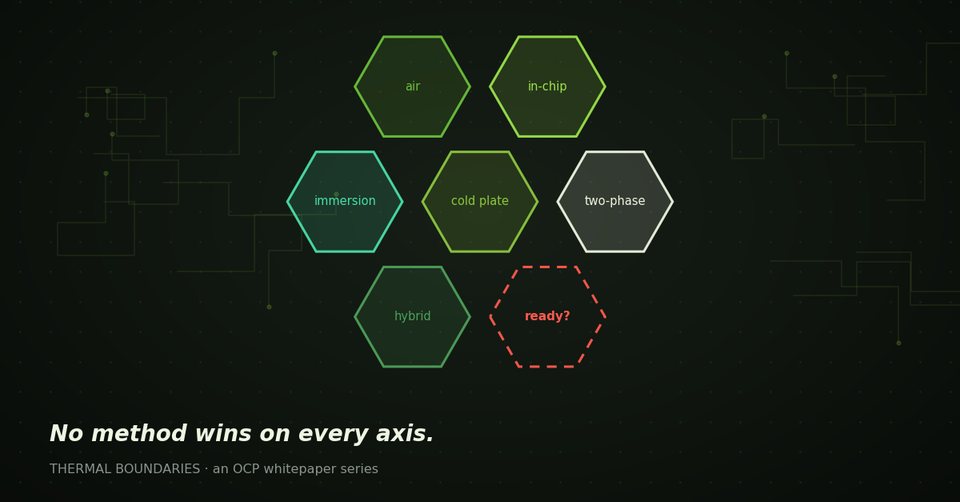
The Toolbox
No Single Winner, and Why That Is the Answer
Commissioning the AI Datacenter
Epilogue
What drives adoption, and what follows from it.
 January 28, 2025
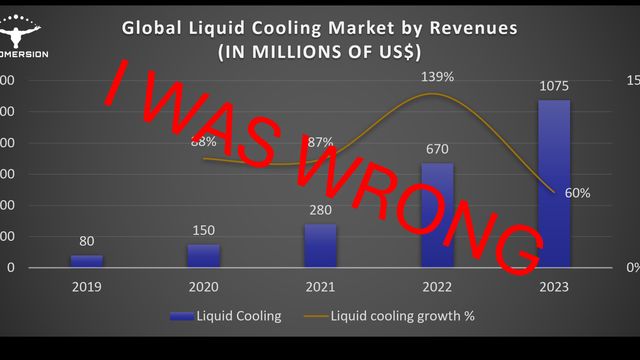
Projecting the Cooling Landscape of 2030
A fragmented ecosystem in which air, cold plate and immersion cooling coexist, each matched to specific workloads and densities.
 December 10, 2024
The Rise of Necessity-Driven Cooling: What Cold Plate Adoption Means
Cold plate adoption is driven by IT platform evolution, rising power density and architectural limits. What that means for the future of immersion.
Accelerating at supersonic speed.
Bridging the IT-Facility Divide.
 July 11, 2023
Part 1
The separation between IT and facility, and how liquid cooling creates new operational dependencies.
 July 18, 2023
Part 2
When coolant enters the IT chassis, the shared fluid becomes part of the IT domain and needs new demarcation and responsibility models.
 July 26, 2023
Part 3
Operating models built on collaboration, shared language, cross-training and integrated maintenance.
 August 14, 2023
Part 4
Colocation: multi-tenant role clarity, managed liquid cooling services, security and liability.
 August 22, 2023
Part 5
The benefits of integrated IT and facility management, from tenant customization to Cooling as a Service.
The limits of immersion, examined.
Embracing the Future of Data Centers.
 May 9, 2023
Part 1
Sustainability targets and compute growth, and the need for liquid cooling that follows from them.
 May 16, 2023
Part 2
What blocks adoption: standards gaps, limited warranted immersion-ready IT and fragmented fluid options.
 May 23, 2023
Part 3
How structured collaboration and workstreams within OCP advance immersion maturity.
 May 30, 2023
Part 4
Resistance to change reframed as opportunity: simpler infrastructure, efficiency gains and heat reuse.
 June 6, 2023
Part 5
Action steps for facilities, roadmaps and engagement with suppliers, utilities and OCP.
 June 13, 2023
The Epilogue of Our Journey
Reflections on the community discussion, with priorities such as coolant sustainability, education and open progress reporting.